

With millions of Americans planning to trade the comfort of their homes for in-laws, out-of-town family and airport delays over the holidays, one more seasonal traveler is putting the pedal to the metal: influenza.
The country is already seeing an increase in activity of the flu. In the week that ended Dec. 13, about 4 percent of visits to health care providers were for respiratory illnesses and nearly than 10,000 patients have been hospitalized with influenza, according to new data from the US Centers for Disease Control and Prevention, which was released Friday. Three children have already died from the flu this flu season.
Those numbers mean the virus can be much closer to home than many families realize. Holiday merriment might entail party or family time spent with someone who is just recently bouncing back from the flu, or beginning to feel sick. Do they still need to get up to open presents on Christmas morning? How long you should put off a trip to grandma’s house for cookie making?
Now that there are more flu cases in the U.S., here’s what families need to know about flu this holiday season.
There are several over-the-counter flu tests on the market in US, and users can take the home test as a nasal swab test much like Covid-19 tests.
The idea behind a report-like system is something many doctors recommend that one should do when she or he comes down with symptoms.
Travelling this #HolidaySeason?
Wear a mask when in crowded and inadequately ventilated spaces, especially if you are in a risk group.
And remember these other measures to help protect yourself and others from COVID-19, flu, measles and other respiratory illnesses:… pic.twitter.com/dF3pRN6jEL
— World Health Organization (WHO) Western Pacific (@WHOWPRO) December 22, 2025
“Especially if you are a person in the high-risk group,” said Dr. William Schaffner, an infectious disease expert at Vanderbilt University Medical Center.
“Those people are if you’re 65 or older, if you have a chronic underlying medical condition — and when we say that we mean anything, diabetes, hypertension, heart disease — if you’re immunocompromised; if you’re pregnant; and young children,” he said. “All of those are people in a high-risk category, and if they develop symptoms, that’s when one gets tested because we would have antivirals to give them effective therapy so they wouldn’t wind up being hospitalized,” he said.
The symptoms of flu “typically come on quite suddenly with fever, chills, headache, body aches and fatigue,” wrote Dr. Pamela Lindor, a pediatrician at the Bluebird Kids Health clinic in Jacksonville, Fla., by email.
“Flu isn’t the only illness we’re worried about. Maybe you have Covid, and if you have Covid, we have another drug that might help keep you out of the hospital,’’ he said.
Prescription flu antiviral drugs like Tamiflu or Xofluza are most effective when started early, preferably within two days of developing the symptoms of the flu.
“For the flu, once you are ill, the earlier you start on antivirals the better,” Schaffner said. “There is the 48-hour rule. Namely, for the maximum effectiveness, you have to start taking it within the first 48 hours after you get symptoms. Even at 48 hours — especially for high-risk individuals, but also for all others — some modulating of the effect of the antivirals can occur.”
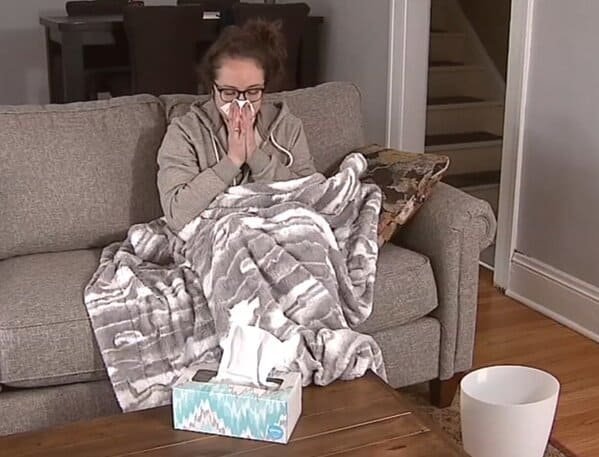
When a person first becomes ill, they should remain home and avoid other people to keep from exposing others to the virus.
“You can be spreading the influenza virus on the day before you become symptomatic,” Schaffner said. “But still, wear a mask and distance yourself from other members of your family as much as you can until your symptoms begin to ease up and you haven’t run a fever for 24 hours without taking Tylenol.”
According to the CDC, individuals can resume normal activities when they have had no fever for at least 24 hours and other symptoms are improving.
That will typically be a minimum of four or five days,” Lindor said. “Flu is most contagious beginning the day before you first become sick and continuing 5 to 7 days after.”
Some individuals with symptoms or a fever could be tempted to come anyway to be with family and open Christmas presents, if only they wear a mask, but Schaffner still cautioned against that.
“If you’ve got symptoms, I think you need to stay home,” Schaffner said.
“‘I have some symptoms but I’ll wear a mask’ or ‘You don’t know the symptoms completely,’ well there’s still risk in that. Yes, that will lower the risk of transmission but not bring it to zero. And guess what? It’s very difficult to eat and drink with a mask on,” he said. “So, you are going to be exposing people. And by the time it gets to family members, even if you have that mask on, they’ll be kissing and hugging. “And something like these are very close circumstances, so you’ve got to restrain yourself and distance yourself; otherwise you’re very much at risk of becoming a dreaded spreader.”
Though those suffering flu should take steps to keep away from others and prevent spreading the disease, there are things that members of their household can do themselves to minimize their risk of getting ill.
“Good handwashing is incredibly important to prevent spread,” Lindor said. “Frequently touched surfaces in the home should be disinfected.”
Some doctors may recommend that people who have been exposed to someone with flu, but do not yet have symptoms themselves, take antiviral medications — particularly if the person they were exposed to is at higher risk.
“Tamiflu is a prescription that can be given to individuals who have been exposed to the flu and generally takes between 7-10 days before you are immune to the strain,” Lindor said. “Xofluza can also be used as prophylaxis, requiring only one dose in adults and children 5 or older.”
In one case, a 22-year-old college student may fly home for Christmas to see his grandfather. The next day, now that they have already gone to see their grandfather, they test positive for the flu.