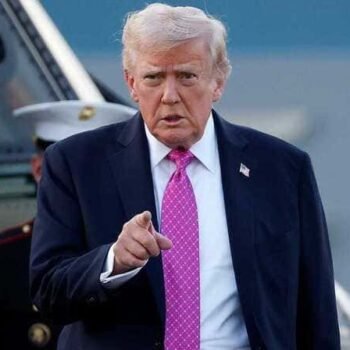

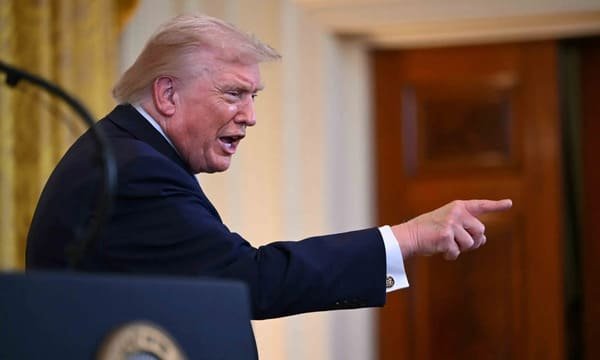
President Trump on Tuesday added a ban that included Syria to an earlier set of restrictions banning citizens from eight other countries from entering the United States.
The White House said in a statement that he signed a proclamation “expanding and enhancing the travel restrictions on nationals from countries that have shown they cannot or will not improve their security standards to meet US leadership, it is long past time for the countries of the world to join this decisive attempt to end modern terrorism”.
Tuesday’s decision barred citizens from Burkina Faso, Mali, Niger and South Sudan among other nations as well as Syria and people holding Palestinian Authority travel documents.
The move also fully restricts Laos and Sierra Leone, which had been partially restricted before.
The White House said the broader ban takes effect on Jan. 1.
The move is in defiance of Trump’s promise to “do everything he could” to make Syria work following historic November talks with President Ahmed al-Sharaa, a former al Qaeda chief who was until recently under US sanctions as a foreign terrorist.
AMERICA FIRST SECURITY 🇺🇸
President Donald J. Trump just signed a new Proclamation, STRENGTHENING our borders & national security with data-driven restrictions on high-risk countries with severe deficiencies in screening & vetting. pic.twitter.com/DZmqpkerKb
— The White House (@WhiteHouse) December 16, 2025
Sharaa, whose visit was the culmination of a remarkable year for the rebel-turned-ruler who overthrew long-time autocrat leader Bashar al-Assad yet has traveled around the world to portray himself as a moderate leader keen to reunify his war-battered nation after decades of international isolation.
But in a social media post on his Truth Social platform on Saturday, Trump promised to respond “very substantially” after the US military announced that two American soldiers and a civilian interpreter were killed in Syria by what was believed to be an Islamic State attacker who targeted a convoy of US and Syrian forces before being shot dead.
He called the episode, in comments to reporters, a “terrible” attack.
Visa overstay rates for Syria were among justifications cited by the White House to explain the ban.
“Syria is coming out of a prolonged period of internal instability and civil conflict. “The United States also continues to offer our support for the Syrian people and our commitment to consolidate gains in defeating both ISIS and Al Qaeda, along with other terrorist groups,” the White House said in a statement of its footnote citation.
In June, Trump signed a proclamation prohibiting citizens of 12 countries from traveling to the United States and placing restrictions on those from seven others because — he said — it was necessary to defend against “foreign terrorists” and other security risks.
The restrictions apply to both immigrants and non-immigrants, a category that include tourists, students and business travelers.
The travel prohibition remains in effect for those 12 countries, the White House said.
Trump also instituted partial bans and visa restrictions on an additional 15 countries, from Nigeria – which the president has long been gunning for over its treatment of Christians, who he once threatened to intervene in militarily at the start of November – to Sudan.
Nigeria has denied persecution of Christians and said such charges reflect a complex security situation as well as show recent campaigns to promote religious freedom are not notice.
Trump has refocused on immigration enforcement since returning to office in January, deploying federal agents to US cities as part of a crackdown and turning away asylum seekers at the US-Mexico border.
The countries included among those with new restrictions will be added to a list of other immigration measures the administration has been considering since two members of the National Guard were shot last month in Washington.