

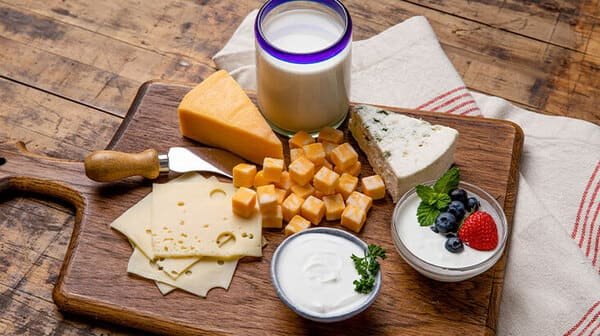
Fat from high-fat cheese and cream may slightly shield the brain from dementia, researchers reported in an observational study that followed 27,860 Malmö, Sweden, residents for up to 25 years.
Cheeses with high fat content, like cheddar, Brie and Gouda also contain more than 20% of saturated fat, the research found.
But outside experts who spoke to CNN say the report doesn’t make a compelling case for eating more full-fat dairy.
“Their result on cheese was at the margin of statistical significance and they looked at many, many foods, so it is possible this observed association could be due to chance,” said Dr. Walter Willett, a leading nutrition researcher who is chairman of the department of nutrition at Harvard T.H. Chan School of Public Health and professor of medicine at Harvard Medical School in Boston.
“I’m not heading out with a stack of cheese to buy things,” Willett said in an email.
“Higher intake of high-fat cheese and high-fat cream was associated with a lower risk of all-cause dementia.”
Results of a 25-year prospective study of ~27,000 participants.
The purported benefit was not linked to APOE4 carriers or low-fat cheese intakehttps://t.co/tj2lHJRSzR pic.twitter.com/0pBcyAuFsI— Eric Topol (@EricTopol) December 17, 2025
One significant limitation of the study is that it recorded dietary habits only once — in 1991, at the beginning of the study — and did not follow up with most participants in the group over the next quarter-century. Instead, the authors conducted an analysis on a subset of participants after five years to determine whether they had since changed their diets.
“Because under this model the associations for both high-fat cheese and cream were no longer significant, this raises questions with regard to the robustness of their conclusions,” Dr. Tian-Shin Yeh wrote in an editorial accompanying the study.
Yeh is an associate professor and attending physician in the college of medicine at Taipei Medical University, Taiwan.
Moreover, the benefits of full-fat cheese were strongest in situations where cheese was subbing for “clearly lower nutritional quality foods,” like processed or high-fat red meat, Yeh wrote.
“Not that high-fat cheese is necessarily neuroprotective, but it’s more a matter of between red and processed meats compared to high-fat cheese.”
People who ate 50 grams (about 2 ounces) or more of high-fat cheese every day had a 13 percent lower risk of dementia than those who consumed less than 15 grams (0.5 ounce), the researchers found in the study, which was published Wednesday in the journal Neurology.
People who drank 20 grams (or about 0.7 ounce) or more a day of high-fat cream also had, on average, a 16 percent lower risk of dementia than those who consumed none. That would be roughly 1.4 tablespoons of heavy whipping cream, the study said.
“Our study adds to the growing evidence that a high intake of cheese is not associated with increased risk for cardiovascular disease, as some people would think,” said senior study author Emily Sonestedt, a senior lecturer and associate professor of nutrition at Lund University in Sweden.
“This doesn’t prove cheese is good for dementia, but it certainly calls that into question,” she said in an email.
The finding may please some in the Make America Healthy Again, or MAHA movement who support saturated fats as part of a healthful diet. US Health and Human Services Secretary Robert F. Kennedy Jr promotes butter and beef tallow, despite the fact that numerous studies show they’re bad for your health.
But the study could find no positive effect on the brain from butter, milk or fermented products such as kefir or yogurt, of either the low-fat or full-fat variety.
Indeed, the numbers for low-fat dairy were rather telling, said Dr. David Katz a specialist in preventive and lifestyle medicine who is the founder of the nonprofit True Health Initiative, a global coalition that advocates prioritizing evidence-based common sense for disease prevention and sustainable health promotion. He was not a part of the study.
“The lower-fat dairy group had a much higher load of health problems at baseline, including diabetes, dyslipidemia and coronary disease among others,” Katz said in an email.
“This, in turn, implies that the true risk factor for dementia is poor health/chronic disease and that switching to low-fat dairy may have been a ‘self-defense’ mechanism among those who knew they had health conditions associated with greater deteriorative processes.”
The study is also not representative of the general population because dairy cows are generally grass-fed in Sweden, neurologist Dr. Richard Isaacson, director of research on Alzheimer’s at the Institute for Neurodegenerative Diseases in Florida said.
Cows that are grass-fed also tend to yield more omega-3-fatty acid-filled milk, cream and cheese.
“In my opinion, omega-three fatty acids are brain healthy,” said Isaacson, who was not involved in the study. “But in those who have APOE4, a gene that raises the risk of developing Alzheimer’s, they’re largely brain healthy.
“This study found the opposite — that people without the APOE4 gene were at an even greater advantage. It’s a tangled set of results, and while I find this interesting, for sure I’m not going to tell people to go out and eat cheese that is high in fat in order to protect yourself from Alzheimer’s.”
Sonestedt also acknowledged that the findings might not apply to Americans and others in Westernized nations.
“Swedes and Americans eat about the same amount of cheese per capita, but what they eat is very different,” Sonestedt said. “In Sweden it’s a lot of hard, fermented cheeses and in the U.S. there’s more processed cheese or eaten on fast-food occasions.
“We would like to see our results reproduced in other countries and populations before we draw firm conclusions,” she said.